
How To Build Trust With Your Stepson: Nine Ways That Work
Practical Ways to Build a Stronger Stepdad–Stepson Relationship

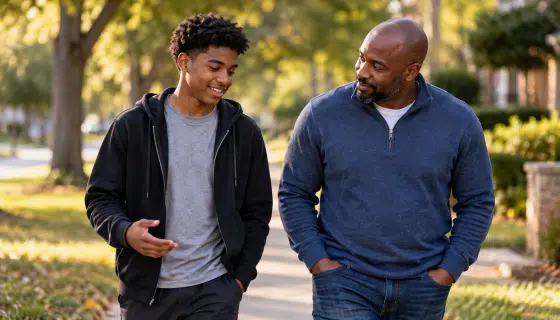
Learning how to build trust with your stepson takes time, patience, and consistency. You may enter his life ready to care for him, encourage him, and become someone he can depend on. But he may not be ready to accept you in that role.
That doesn’t necessarily mean you’ve done anything wrong. Your stepson may still be adjusting to his parents’ separation, divorce, remarriage, or changes between two homes. He may wonder what accepting you means for his relationship with his biological father. He may even like you while feeling uncomfortable showing it.
For a stepdad, that can be confusing. You’re expected to help raise a child while recognizing the relationship giving you influence is still developing.
The good news is you don’t have to force that relationship. Trust grows when your stepson repeatedly experiences you as safe, dependable, respectful, and genuinely interested in him.
Here are nine ways to help make that happen.
1. Let Trust Develop at His Pace
One of the easiest mistakes a new stepdad can make is trying too hard to create an instant family. You may be enthusiastic about your new role, but your stepson didn’t necessarily choose the changes taking place around him.
Give him room. You don’t need to become his best friend, substitute father, coach, and confidant during your first few months together.
That means showing up, keeping your promises, listening, and treating him with respect. Over time, those seemingly ordinary actions create something much more important than instant closeness: security.
Your relationship with your stepson has a season, too. Don’t rush what needs time to grow.
2. Keep Your Promises
Children pay attention to whether adults do what they say they’ll do. Your stepson may pay even closer attention if family changes have already brought uncertainty into his life.
If you say you’ll attend his game, make every reasonable effort to be there. If you promise to help him with a project Saturday morning, remember. If plans must change, explain why rather than simply disappearing.
You don’t need grand gestures. Consistency usually matters more. A hundred-dollar outing won’t compensate for repeatedly breaking small promises. Conversely, remembering that you said you’d drive him to practice can quietly communicate, You matter enough for me to remember.
Be a man whose word means something. When your stepson learns he can depend on what you say, trust has fertile ground to grow.
3. Respect His Relationship With His Biological Father
Your stepson shouldn’t have to choose between caring about you and loving his father.
A child may interpret an attack on his father as an attack on part of himself.
You also don’t need to compete. Your goal isn’t to replace his father or prove you can do the job better. Your goal is to develop your own relationship with your stepson – one built on what you uniquely bring into his life.
Give him permission to talk about his dad. Allow him to enjoy time at his other home without making him feel guilty. If he comes home excited about something he did with his father, share his excitement instead of withdrawing.
Sometimes honoring your stepson means respecting relationships that matter to him, even when it requires humility.
4. Listen More Than You Lecture
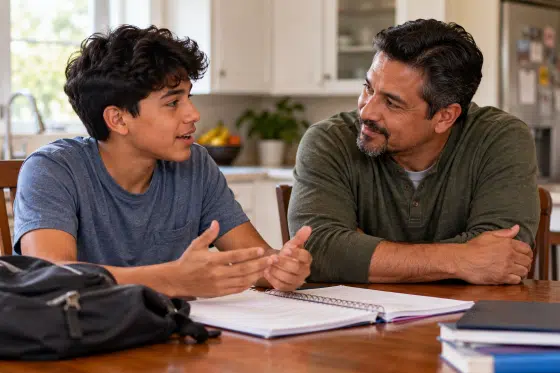
Stepdads often want to fix things. When a child describes a problem, our instincts can quickly move toward advice, solutions, or a story about how we handled something similar.
Sometimes your stepson doesn’t need a solution. He needs someone to hear him.
When he tells you about a disagreement with a friend, trouble at school, disappointment on the team, or frustration with something at home, resist jumping immediately into problem-solving mode.
Ask questions. Listen to his answers. Give him time to finish.
You might simply ask, “Do you want my advice, or do you just need me to listen?”
That question can communicate enormous respect. It tells your stepson his thoughts matter and that a conversation with you doesn’t automatically become a lecture.
5. Take an Interest in His World

You don’t have to love everything your stepson loves. But learning about what matters to him is one of the simplest ways to build a connection.
Maybe he’s interested in football, gaming, music, cars, anime, fishing, science, basketball, art, or something you know absolutely nothing about. That’s okay. Ask him to teach you.
Rather than pretending to be interested, become genuinely curious. Ask why he likes a particular game. Learn the name of his favorite player. Listen to a song he enjoys. Watch him demonstrate something he’s proud of.
Children usually recognize forced interest. They also recognize sincere curiosity.
Entering your stepson’s world communicates something powerful: What matters to you matters to me because you matter to me.
6. Don’t Demand Respect – Model It
“I’m the adult, so you have to respect me.”
That statement may establish authority, but it rarely builds a relationship.
If you want your stepson to speak respectfully to you, speak respectfully to him. If you expect him to apologize when he’s wrong, be willing to apologize when you’re wrong.
And you will be wrong sometimes. Maybe you misunderstood what happened. Perhaps you raised your voice unnecessarily. Maybe you made a promise you couldn’t keep or reacted before hearing the whole story.
A sincere apology doesn’t weaken your authority. It demonstrates integrity.
Your stepson watches how you live far more closely than he listens to speeches about how he should live. Model the character you hope to see in him.
7. Let His Mom Take the Lead on Discipline – Especially Early On
Discipline can become one of the quickest sources of resentment in a new stepfamily.
When possible, especially early in the relationship, let your stepson’s mother lead significant discipline. You can support household expectations without immediately becoming the chief disciplinarian.
This doesn’t mean your stepson can ignore you or that you have no authority in your home. Basic expectations involving safety, courtesy, and household rules still apply. However, relational authority is usually earned before it’s effectively exercised.
Avoid arguing about discipline in front of the children or putting each other in positions where someone must choose sides.
Correction should ultimately guide rather than humiliate. As your relationship strengthens, your ability to influence your stepson will usually strengthen with it.
8. Create Opportunities for Connection Without Forcing Them
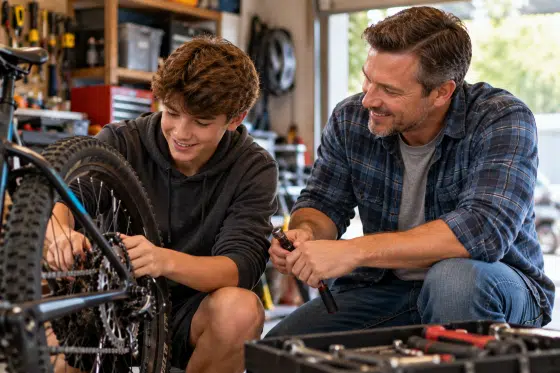
Some of the best stepdad–stepson conversations happen when nobody planned them.
They happen while driving to the hardware store, shooting baskets, walking the dog, grilling burgers, fixing something in the garage, playing a video game, or stopping for something to eat.
Side-by-side activities can be particularly helpful because they remove the pressure of sitting face-to-face and saying, “We need to talk about our relationship.”
Find simple things you can do together and allow conversation to develop naturally. Don’t measure success by whether he opens his heart during every outing. Maybe you spend two hours fishing and mostly talk about fish. That’s still time together.
The memories you create become part of the relationship you’re building.
Have fun with your stepson. Laugh together. Develop inside jokes. Give him opportunities to experience you not simply as another authority figure, but as someone who genuinely enjoys being around him.
9. Love Him Without Keeping Score
This may be the hardest part of being a stepdad.
You can invest time, energy, patience, and love without immediately receiving the response you hoped for. Your stepson may not say thank you. He may sometimes reject your attempts to connect. He might enthusiastically hug his father while barely acknowledging something thoughtful you did for him.
Don’t turn the relationship into a ledger. Love that constantly calculates what it receives in return eventually becomes resentment.
That passage is often read at weddings, but it also provides an excellent blueprint for stepparenting.
Be patient. Be kind. Don’t keep score. Your responsibility is to control the kind of stepdad you choose to become. You cannot control how quickly your stepson responds.
When Progress Feels Slow
Some days, you may wonder whether anything you’re doing is making a difference.
Pay attention to the small signs. Maybe your stepson starts sitting next to you on the couch. Perhaps he asks for your opinion about something. He tells you a joke, asks you to drive him somewhere, invites you to watch him play, or begins sharing pieces of his day without being asked.
Those moments may not look dramatic, but they can show the walls are coming down.
Trust often grows quietly. A child who has experienced significant family changes may need repeated evidence that you aren’t going anywhere simply because the relationship becomes difficult. Your consistency during uncomfortable seasons can speak louder than almost anything you say.
You Don’t Have to Replace Anyone
He already has a father, whether that relationship is close, distant, complicated, or somewhere in between.
You can become something different: a trusted stepdad.
You can be the man who keeps his promises, listens when he talks, shows up when it matters, treats his mother well, admits when he’s wrong, respects his relationship with his dad, laughs with him, encourages him, and remains steady when life becomes difficult.
Eventually, your stepson may look back and recognize something he couldn’t fully appreciate while growing up: you chose to love a child you didn’t have to love.
So don’t worry about forcing a title, demanding affection, or measuring your relationship against someone else’s. Concentrate on becoming a man worthy of his trust.
You may not see the results immediately. Keep showing up anyway.
Trust is built one promise, one conversation, one apology, one laugh, and one ordinary day at a time.