World Food Day fun facts are on the menu this Friday as we celebrate World Food Day on October 16! World Food Day, observed annually on October 16, commemorates the founding of the United Nations Food and Agriculture Organization (FAO) in 1945.
The observance raises awareness about hunger, food security, and access to nutritious food. At Support for Stepdads, we’re marking the occasion with a lighthearted culinary adventure around the world, where unusual dishes, surprising traditions, and a few questionable dinner decisions are guaranteed to make you smile.
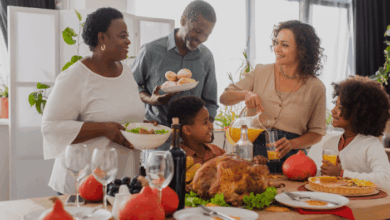
Every evening, millions of families face one of life’s most challenging questions: “What’s for dinner?”
Three innocent words that can trigger negotiations worthy of the United Nations.
Dad wants steak. Mom suggests vegetables. One child wants pizza, another demands chicken nuggets, and the teenager insists, “I’m not hungry.” Twenty minutes later, that same teenager emerges from the bedroom and consumes enough food to support a small village.
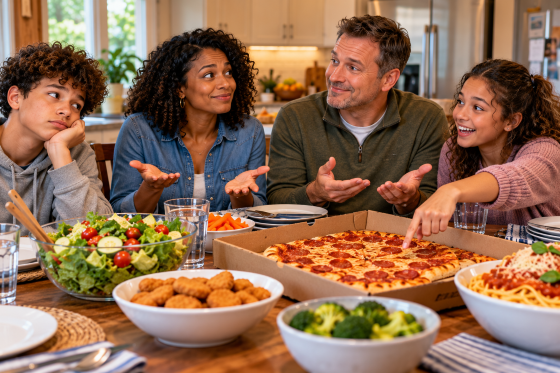
For blended families, dinner negotiations can become even more interesting. Children arriving from different households bring their favorite meals, family traditions, and occasionally strong opinions about spaghetti sauce.
Fortunately, Friday, October 16, gives us the perfect excuse to celebrate food in all its delicious, unusual, and sometimes questionable forms.
It’s World Food Day!
Observed annually on October 16, World Food Day commemorates the founding of the United Nations Food and Agriculture Organization (FAO) in 1945. It also reminds us that millions of people still struggle to obtain sufficient, nutritious food.
The 2026 theme, “Innovate today. Nourish tomorrow,” highlights the importance of finding better ways to produce, distribute, and share food.
That’s a serious message worth remembering, even while we enjoy a little culinary humor.
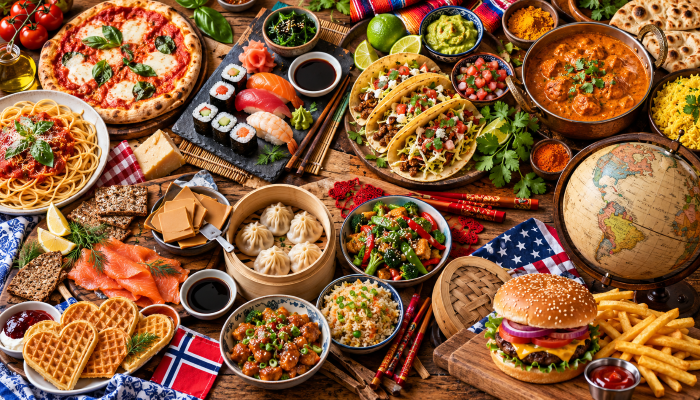
So grab your imaginary passport, loosen your belt, and join us for a delicious journey around the world in 80 bites. No luggage required, and thankfully, no airline baggage fees.
A special welcome to our Norwegian readers! We’ve saved you a seat at the table. Just don’t expect us to pronounce every dish correctly.
Italy – Where Pasta Is Practically a Love Language
If you’ve watched an Italian grandmother prepare dinner, you know cooking can involve family history, closely guarded recipes, and enough food to feed the entire neighborhood.
Italy has given us pizza, pasta, risotto, gelato, and the comforting belief that cheese improves almost anything. Who are we to argue?
Bites 1-10: A Taste of Italy
-
Italy has hundreds of pasta shapes, each designed to complement different sauces.
-
Spaghetti translates roughly to “little strings.” Apparently, “delicious edible shoelaces” didn’t make the final cut.
-
Traditional Neapolitan pizza is famous for its simple ingredients and distinctive crust.
-
Italians generally don’t serve spaghetti and meatballs together the way many Americans do.
-
Gelato typically contains less fat than traditional American ice cream. That doesn’t automatically make three servings a healthy plan.
-
Risotto requires patient stirring. It’s an excellent dish for anyone who enjoys standing in one place reconsidering their life choices.
-
In Italy, people traditionally enjoy cappuccino in the morning.
-
Parmesan cheese has been produced for centuries, proving some good ideas never need updating.
-
Italian meals often emphasize conversation and togetherness.
-
If someone says, “Just a little more pasta,” don’t be surprised when your plate resembles Mount Vesuvius.
Dad Joke: What do you call a fake noodle? An impasta!
I know. That joke was so cheesy it probably deserves its own Parmesan topping.
Japan – Where Dinner Is an Art Form
Japan approaches food with remarkable attention to presentation, balance, and flavor. From sushi and ramen to beautifully arranged bento boxes, dinner can be both delicious and visually impressive.
Meanwhile, back at my house, I’m just hoping the broccoli stays on the plate.
Bites 11-20: A Taste of Japan
-
Sushi refers to rice seasoned with vinegar, not necessarily raw fish.
-
Ramen has become popular worldwide, with countless regional variations.
-
Slurping noodles is generally acceptable in many Japanese noodle shops.
-
Bento boxes organize food into separate compartments, which sounds ideal for children who believe peas and mashed potatoes must never touch.
-
Tempura involves lightly battered and fried seafood or vegetables.
-
Miso soup commonly includes fermented soybean paste.
-
Chopsticks have been used in East Asia for thousands of years.
-
Japanese convenience stores are known for offering surprisingly varied prepared meals.
-
Okonomiyaki is a savory pancake with ingredients that vary by region and preference.
-
Japanese food presentation often celebrates seasonal ingredients.
Dad Joke: Why did the sushi refuse to share its feelings? It was on a roll!
And here’s an interesting thought for blended families: A bento box might solve some dinner-table disagreements. Everyone gets a little variety, and the carrots have their own designated territory.
Mexico – Where Every Day Could Be Taco Tuesday
Mexico has blessed the world with tacos, tamales, enchiladas, mole, and countless other delicious dishes.
Of course, in some American households, Mexican food has also introduced a mysterious family tradition: arguing about whether a taco should have a hard or soft shell.
Bites 21-30: A Taste of Mexico
-
Corn has been central to Mexican cooking for thousands of years.
-
Traditional tacos commonly use soft corn tortillas.
-
Mole sauces can contain many ingredients, including chilies, spices, seeds, and sometimes chocolate.
-
Tamales are made with corn-based dough and steamed in wrappers such as corn husks or banana leaves.
-
Guacamole traces its roots to Mexico.
-
Different regions have distinctive styles of tacos.
-
Mexican chocolate is often used in beverages and cooking.
-
Chiles come in numerous varieties, with different flavors and heat levels.
-
Pozole is a traditional soup or stew made with hominy.
-
Taco Tuesday may be popular in America, but tacos don’t need a special day to be appreciated in Mexico.
Dad Joke: Why shouldn’t you tell secrets in a taco restaurant? Because the beans might spill!
Speaking of beans, every family seems to have one child who insists they don’t like them. Oddly enough, the same child may happily eat a bean burrito when nobody mentions what’s inside.
It’s one of parenting’s great mysteries.
India – Where Spices Have Their Own Personalities
Indian cuisine offers an extraordinary variety of flavors and regional traditions. Some dishes are mild and comforting. Others are spicy enough to make you reconsider every decision you’ve made since breakfast.
And let’s not forget naan, one of the world’s best tools for ensuring no delicious sauce goes to waste.
Bites 31–40: A Taste of India
-
Indian cuisine varies enormously from region to region.
-
Turmeric gives many dishes a golden color.
-
Naan is a popular flatbread often cooked in a tandoori oven.
-
Biryani is a fragrant rice dish prepared in many regional styles.
-
Lentils are central to numerous Indian dishes.
-
Samosas are savory pastries often filled with spiced potatoes, peas, or meat.
-
Chai simply means “tea” in Hindi and several other languages.
-
Many Indian meals feature several complementary dishes served together.
-
Paneer is a fresh cheese commonly used in vegetarian cooking.
-
Indian cooking frequently uses combinations of spices rather than relying on one seasoning.
Dad Joke: I told my family I was making Indian food for dinner. They asked if I knew what I was doing. I said, “Don’t curry about it!”
Indian cuisine gives families a chance to explore unfamiliar flavors. Just remember that one person’s “pleasantly spicy” may be another person’s emergency milk-drinking competition.
Norway – Where Vikings, Fjords, and Brown Cheese Meet
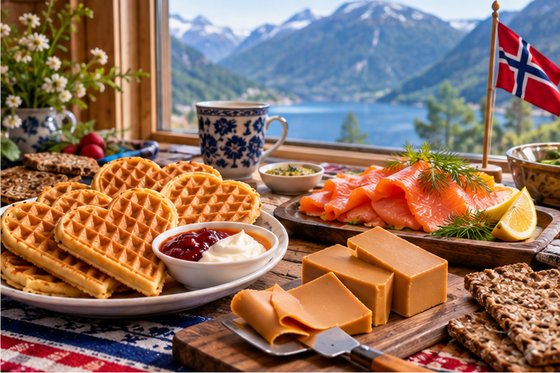
Norway is famous for breathtaking fjords, northern lights, Viking history, and hearty foods shaped by the sea and long winters.
When temperatures fall below freezing and daylight becomes scarce, a warm dinner isn’t merely comforting. It’s practically a survival strategy.
And yes, Norway has given the world brown cheese. More on that in a moment.
Bites 41-50: A Taste of Norway
-
Salmon is practically a national celebrity. Norway is one of the world’s leading producers of farmed Atlantic salmon. Grilled, smoked, or cured as gravlaks, salmon appears in many Norwegian meals. It’s probably the only celebrity that looks better covered in dill.
-
Brunost is cheese with a sweet surprise. Norway’s famous brown cheese has a caramel-like flavor. Technically, it’s made by concentrating whey and sometimes adding milk or cream. Imagine telling your children they can have something that tastes like caramel for breakfast, then explaining it’s cheese. Their confusion alone could be worth the purchase.
-
Lutefisk isn’t for the faint of heart. This traditional dish is made from dried fish rehydrated and treated with lye before being thoroughly rinsed and cooked. Yes, lye. Somewhere along the way, someone looked at dried fish and thought, “You know what this needs? A chemistry experiment.”
-
Fårikål is Norway’s national dish. This hearty stew combines lamb or mutton, cabbage, and peppercorns. It’s especially popular in autumn. Simple ingredients, slow cooking, and delicious results. Even the pickiest child might give it a chance, as long as you don’t lead with the cabbage.
-
Norwegians take their waffles seriously. Unlike their thicker Belgian cousins, Norwegian waffles are typically thin, soft, and heart-shaped. They’re often served with jam, sour cream, or brown cheese. Heart-shaped waffles? Now that’s a breakfast food with excellent public relations.
-
Rakfisk requires patience and a strong sense of adventure. This traditional Norwegian specialty is fermented trout, typically served without cooking after fermentation. Rakfisk reminds us that traditional food preservation involves techniques that may seem unusual to those unfamiliar with them.
-
Kjøttkaker are Norwegian comfort food. These seasoned meat patties are commonly served with potatoes, gravy, and vegetables. Think of them as meatballs that decided to become bigger, flatter, and more ambitious.
-
Norwegians love their open-faced sandwiches. Known as smørbrød, these sandwiches feature toppings such as cheese, fish, eggs, or cold cuts on a single slice of bread. Apparently, the second slice of bread was considered unnecessary paperwork.
-
Pinnekjøtt is a Christmas favorite. This traditional dish features salted and dried lamb ribs, usually steamed and served with mashed rutabaga and potatoes. It’s particularly popular in western Norway. The name translates roughly to “stick meat,” which sounds less like dinner and more like something a dog would request.
-
Norway has a special relationship with Friday tacos. Known as fredagstaco, taco night has become a popular Friday tradition in Norwegian homes. That’s right. Even thousands of miles from Mexico, families have discovered that wrapping dinner in a tortilla is an excellent way to start the weekend.
Dad Joke: Why did the Norwegian salmon refuse to argue with the fisherman? It didn’t want to get hooked into another debate!
Norway’s Friday taco tradition is perfect for blended families. Everyone chooses their toppings, builds their own meal, and enjoys dinner without agreeing on every ingredient.
Of course, the question of who gets the last tortilla remains. Some family negotiations are truly international.
China – Where Sharing Is Part of the Experience
Chinese cuisine offers tremendous regional diversity, from delicate dumplings to savory stir-fries and richly flavored noodles.
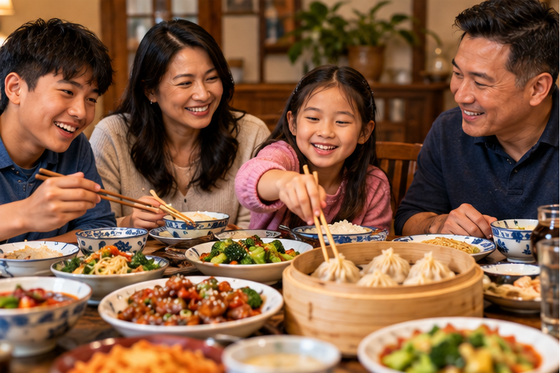
Many meals are served family-style, allowing everyone to share several dishes. It’s a wonderful arrangement, as long as the last dumpling doesn’t automatically belong to the fastest child.
Bites 51- 60: A Taste of China
-
Chinese cuisine includes many regional traditions with distinct flavors and techniques.
-
Dumplings are often associated with family gatherings and celebrations.
-
Chopsticks are commonly used for eating.
-
Rice is a staple in many southern regions, while wheat-based foods are especially important in much of the north.
-
Dim sum includes a variety of small dishes often enjoyed together.
-
Sichuan cuisine is known for bold flavors and the distinctive tingling sensation of Sichuan peppercorns.
-
Hot pot allows diners to cook ingredients together in simmering broth.
-
Tea has a long history in Chinese culture.
-
Longevity noodles symbolize long life in certain celebrations.
-
Fortune cookies are more closely associated with Chinese American dining than traditional cuisine in China.
Dad Joke: What did the dumpling say when it won the competition? “That’s how I roll!”
Sharing dishes can also help children discover new favorites. A child who refuses an entire plate of unfamiliar food may be willing to try one bite from a shared platter.
Just don’t turn every new dish into a courtroom cross-examination.
“Did you try it?”
“Yes.”
“Did you like it?”
“No.”
“Would you try it again?”
“I’d like to speak to my attorney.”
The United States – Where Dinner Is Whatever Everyone Agrees On
American cuisine reflects an extraordinary mixture of cultures and traditions. Barbecue, burgers, fried chicken, regional pizzas, and immigrant-influenced dishes all have their place.
But perhaps America’s greatest culinary invention isn’t a particular dish. It’s the drive-through window.
After work, homework, sports practice, and sibling negotiations, preparing dinner can feel like competing on a television survival show.
Bites 61–70: A Taste of America
-
Barbecue styles differ significantly across American regions.
-
Chicago and New York are famous for very different pizza styles.
-
Macaroni and cheese is a beloved American comfort food.
-
Thanksgiving meals often include turkey, stuffing, and regional family favorites.
-
Cornbread is especially associated with Southern cooking.
-
The hamburger became an American icon, although its history includes European influences.
-
American diners helped popularize all-day breakfast.
-
Peanut butter and jelly sandwiches have rescued countless busy parents from lunchbox emergencies.
-
Potluck dinners invite guests to contribute dishes, creating variety and occasional mystery casseroles.
-
Leftover pizza has convinced generations of teenagers that breakfast is a flexible concept.
Dad Joke: Why did the hamburger go to the gym? To get better buns!
If your blended family includes picky eaters, congratulations. You’re participating in an enduring American tradition: preparing the meal everyone requested yesterday, but nobody wants today.
Our Final Destination – The Family Dinner Table
After exploring the food traditions of seven countries, we’ve discovered something important. Food traditions differ, but families everywhere use meals to connect, celebrate, and create memories.
Children also seem remarkably united in their ability to ask, “What’s for dessert?” before finishing dinner.
Let’s conclude our journey with ten observations from the most unpredictable dining destination of all: home.
Bites 71-80: The Universal Family Dinner Experience
-
The person who says, “I’m not that hungry,” may still eat half your fries.
-
Someone will ask what’s for dinner while you’re visibly cooking it.
-
Children can detect microscopic pieces of onion in a casserole but somehow overlook their dirty socks on the living room floor.
-
The meal you spent two hours preparing may receive less enthusiasm than frozen pizza.
-
A teenager can claim there’s nothing to eat while standing in front of a fully stocked refrigerator.
-
Leftovers are either tomorrow’s treasure or mysterious containers nobody wants to identify.
-
The family member who dislikes vegetables may suddenly love them when they’re deep-fried.
-
Someone will inevitably announce they’re full, then request dessert.
-
The last piece of garlic bread can test the strength of family relationships.
-
The best family meals aren’t always the fanciest. They’re the ones where everyone feels welcome, included, and comfortable being themselves.
Bringing the World to Your Blended Family Table
One of the joys of blended-family life is discovering the different traditions each person brings into the household.
Perhaps your stepdaughter loves a dish her grandmother prepares. Your stepson may have a favorite meal from his other home. Your spouse might have childhood recipes that hold special meaning.
Instead of treating those differences as complications, why not celebrate them?
Consider introducing an occasional Around-the-World Dinner Night. Let each family member choose a country, help pick a recipe, and help prepare the meal. Older children can research the food’s history, while younger ones can help measure ingredients or set the table.
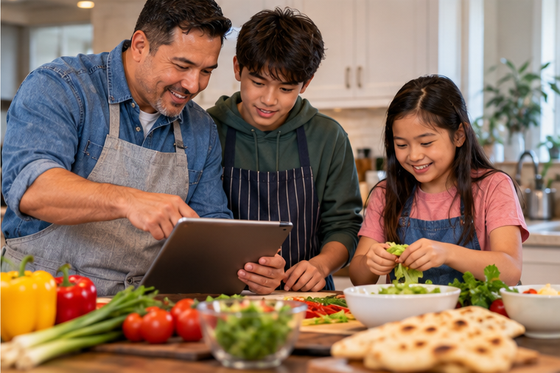
You might discover a new family favorite. You might also discover that nobody in your household can pronounce the dish you’ve chosen.
Either outcome could make for a memorable evening.
For stepdads, cooking together offers opportunities to build relationships without forcing conversation. Working side by side, sharing responsibilities, and laughing over kitchen mishaps can create a relaxed environment where trust grows naturally.
And remember, when a stepchild talks fondly about a meal enjoyed at their other home, there’s no need to compete. You can appreciate that memory and perhaps invite them to teach you how to prepare the dish.
Food should bring families together, not become another contest between households.
The Final Bite: What’s for Dinner Tomorrow?
Our culinary adventure has taken us through pasta-filled kitchens, noodle shops, taco stands, spice markets, Norwegian fjords, and family dinner tables.
We’ve learned that people around the world approach food differently, but we all understand the joy of sharing a meal.
For blended families, dinner doesn’t have to be perfect to be meaningful. Sometimes the most memorable evenings involve spilled drinks, questionable cooking experiments, and laughter that continues long after the dishes are cleared.
World Food Day also reminds us to be grateful for the meals on our tables and to remember families who struggle to put food on theirs. It’s a chance to teach our children about generosity, reduce food waste, and help neighbors experiencing food insecurity.
Perhaps your family could celebrate by donating groceries to a local food pantry, preparing a meal for someone in need, or volunteering together at a community kitchen. These simple acts can help children understand that sharing food is about more than satisfying an appetite. It’s also an expression of kindness and compassion.
And if your carefully prepared international feast doesn’t impress the children, don’t despair. There’s always pizza. After all, it has already conquered much of the world.
Bon appétit, buon appetito, itadakimasu, and happy eating!
And to the brave parent or stepdad responsible for tomorrow’s dinner, may the odds be ever in your flavor.
Learn more: World Food Day — Food and Agriculture Organization of the United Nations