
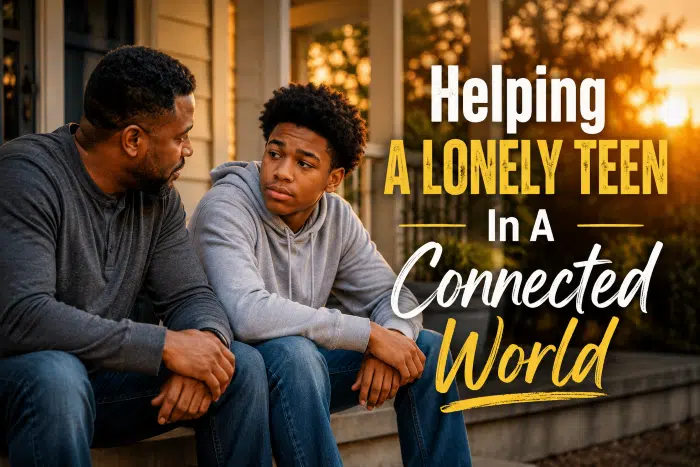
Helping A Lonely Teen In A Connected World
Practical Ways to Help your Teen Overcome Loneliness, Build Confidence, and Develop Meaningful Relationships in Today's Digital Age

We live in one of the most connected times in history. Teens can text friends instantly, join group chats, and connect through social media at any hour. Yet many teenagers feel more alone than ever.
That reality isn’t just ironic – it’s heartbreaking.
Your teen may have hundreds of followers, dozens of online friends, and a phone that rarely leaves their hand.
Many teens quietly struggle with loneliness, insecurity, anxiety, and the feeling no one truly knows them.
For parents, stepdads, and caregivers, that can be difficult to see. Nevertheless, there is encouraging news. You have more influence than you may realize.
In fact, helping a lonely teenager often starts with simple, consistent actions at home.
What Teens Are Really Looking For
Whether they say it out loud or not, most teens are searching for the same things previous generations wanted:
-
Approval
-
Loyalty
-
Belonging
-
Understanding
-
Acceptance
-
Love
Those needs aren’t new. However, today’s culture often tells teens they can satisfy those needs through likes, comments, followers, and online attention.
Unfortunately, that promise rarely delivers.
As a result, many teens continue scrolling, posting, and checking notifications. They hope the next message, comment, or friend request will finally fill the emptiness they feel inside. Yet the loneliness often remains.
Furthermore, many teens struggle to separate popularity from genuine connection. Someone can receive hundreds of likes and still feel completely alone.
Scripture reminds us where true belonging originates:
Ultimately, your teen’s deepest need isn’t merely social. It is relational, emotional, and spiritual.

Why So Many Teens Feel Alone
Social Media Creates A False Sense Of Connection
First, social media often encourages teens to present a carefully edited version of themselves.
They post highlights rather than struggles. They share successes rather than disappointments. They display confidence even when they feel insecure.
Consequently, many teenagers begin living behind a mask.
The problem is simple. When nobody sees the real person, nobody can truly know the real person.
That is often where loneliness begins.
Your teen needs relationships where they can be authentic without fear of rejection. They need people who accept them beyond achievements, appearance, or popularity.
As 1 Samuel 16:7 (NIV) reminds us:
Likewise, healthy family relationships should focus on the heart rather than performance.
Comparison Steals Confidence
Meanwhile, comparison has become a daily struggle for many teens.
Every day they encounter images of successful students, talented athletes, attractive influencers, and seemingly perfect families.
As a result, they constantly measure themselves against unrealistic standards.
When teens compare their real lives to someone else’s carefully curated highlights, they almost always feel inadequate.
Furthermore, comparison rarely motivates growth. Instead, it often creates discouragement, insecurity, and isolation.
Galatians 6:4 (NIV) offers a healthier perspective:
Parents and stepdads can help by teaching teens to focus on personal growth rather than constant comparison.
Bullying Doesn’t End At School
Unfortunately, bullying has changed dramatically.
In previous generations, bullying often ended when school ended. Today, bullying follows teens home through texts, social media, gaming platforms, and messaging apps.
Because of this, many teenagers feel like there is no escape.
That makes your home even more important.
Your home should be a refuge where your teen feels safe, accepted, and protected.
Psalm 9:9 (NIV) reminds us:
Likewise, parents should strive to create homes where teens can find comfort during difficult seasons.
Many Teens Don’t Feel Heard
In addition, many teenagers struggle because they don’t feel safe opening up.
Some fear judgment.
Others fear criticism.
Still others worry their feelings will be dismissed.
Over time, silence becomes easier than vulnerability.
When a teen believes nobody is listening, loneliness stops being an occasional visitor and becomes a permanent companion.
That is why James 1:19 (NIV) provides such powerful guidance:
Sometimes the greatest gift you can give your teen is your full attention.

Community Is Harder To Find
Finally, many teens struggle because strong community connections are becoming harder to find.
In the past, teenagers often benefited from close-knit neighborhoods, active churches, extended family gatherings, and regular community involvement. Today, many of those support systems have weakened or disappeared altogether.
As a result, some teens are left trying to navigate life’s challenges largely on their own.
Unfortunately, loneliness thrives when people become disconnected from meaningful relationships.
That is why community matters so much.
Whether through church youth groups, sports teams, volunteer opportunities, school activities, or extended family gatherings, healthy relationships help teens feel supported and valued.
Galatians 6:2 (NIV) reminds us:
Likewise, Hebrews 10:24-25 (NIV) encourages believers not to give up meeting together but to encourage one another.
Parents and stepdads should actively help teens build healthy relationships both inside and outside the home.
Your Role As A Parent
Many parents worry their influence fades during the teenage years.
Fortunately, that is rarely true.
Although teens seek greater independence, they still need guidance, encouragement, and acceptance from the adults who love them.
In fact, research consistently shows that parents remain one of the most significant influences in a teenager’s life.
Therefore, never underestimate your impact.
For stepdads in blended families, this truth is especially important. Even if the relationship feels complicated, your presence, consistency, and support matter more than you may realize.
Create A Home Where They Belong
First and foremost, create a home where your teen feels accepted.
Many teenagers already face pressure at school, online, and among peers. Consequently, home should be the place where they can relax and be themselves.
Your teen should never feel they must earn love through grades, athletic performance, popularity, or accomplishments.
Instead, they need to know they are valued simply because they are part of the family.
Romans 15:7 (NIV) says:
That principle applies powerfully to parents, stepparents, and blended families.
When teens experience acceptance at home, they’re less likely to search for it in unhealthy places.
Speak Life Into Your Teen
Likewise, your words carry tremendous power.
Although teenagers sometimes act like they are not listening, they often remember encouraging words for years.
Therefore, look for opportunities to affirm your teen regularly.
Tell them:
- I’m proud of you.
- You handled that situation well.
- I appreciate your effort.
- You matter to this family.
- I believe in you.
Furthermore, focus on character rather than simply achievements.
Praise kindness.
Celebrate perseverance.
Recognize growth.
Notice integrity.
Over time, these affirmations help shape a healthier self-image.
As 1 Thessalonians 5:11 (NIV) teaches:

Model Healthy Relationships
Furthermore, your teen learns far more from what you do than from what you say.
They watch how you handle conflict.
They observe how you treat your spouse.
They notice whether you show grace, patience, and forgiveness.
Consequently, healthy family relationships provide a blueprint for future relationships.
You don’t have to be perfect.
However, you do need to be intentional.
When parents and stepdads model healthy communication, teens gain valuable relationship skills they will carry throughout adulthood.
As 1 Corinthians 11:1 (NIV) says:
Be Available When They Need You
Even so, meaningful conversations rarely happen on your schedule.
Teenagers often open up unexpectedly.
It may happen during a late-night drive.
It may happen while watching television.
It may happen when you’re exhausted after a long day.
Nevertheless, those moments are opportunities to connect.
When your teen reaches out, try to be fully present.
Put down the phone.
Pause the television.
Listen without rushing to solve the problem.
Often, your presence matters more than your advice.
Romans 12:15 (NIV) reminds us:
Being emotionally available communicates love in powerful ways.
Pursue Connection Intentionally
Ultimately, strong relationships don’t happen by accident.
They require consistent effort.
They require time.
They require intentionality.
Unfortunately, many families assume connection will happen naturally.
However, today’s busy schedules often work against meaningful relationships.
Therefore, make connection a priority.
Eat meals together.
Take walks.
Attend activities.
Ask questions.
Share experiences.
Most importantly, continue pursuing your teen’s heart even when they seem distant.
Many lonely teenagers desperately need someone who refuses to give up on them.
Top 5 Practical Actions To Help Your Lonely Teen
1. Create A Judgment-Free Zone
Allow your teen to speak honestly without fear of immediate criticism or correction.
2. Schedule Weekly One-On-One Time
Even twenty to thirty minutes of focused attention can strengthen your relationship significantly.
3. Put Your Phone Away
Undivided attention communicates value and respect.
4. Affirm Effort, Not Just Results
Notice who your teen is becoming, not simply what they accomplish.
5. Pray For And With Your Teen
Invite God into their struggles and remind them they never face life’s challenges alone.
Remember this important truth:
Consistency beats intensity.
Small daily moments of connection often have a greater impact than occasional grand gestures.
How To Strengthen Your Relationship With Your Teen
Practice Empathy Daily
To begin with, try to see life through your teen’s eyes.
What seems minor to you may feel overwhelming to them.
Therefore, avoid dismissing their concerns.
Instead, seek understanding before offering solutions.
Ephesians 4:2 (NIV) encourages us to:
Empathy builds trust.
Trust strengthens connection.
Connection helps reduce loneliness.
Prioritize Quality Time
Next, make meaningful time together a priority.
Simply sharing the same space isn’t enough.
Instead, focus on genuine engagement.
Play a game.
Go for coffee.
Attend a sporting event.
Work on a project together.
These moments often create opportunities for deeper conversations later.

Stay Engaged Even When They Pull Away
At the same time, don’t stop reaching out when your teen becomes quiet or distant.
Many parents assume silence means rejection.
Often, it means the opposite.
Some teens withdraw because they are hurting.
Others withdraw because they fear vulnerability.
Continue showing up.
Continue asking questions.
Continue expressing interest in their lives.
Sometimes the most powerful message a parent can communicate is:
Pray For And With Your Teen
Finally, never underestimate the power of prayer.
Prayer reminds your teen they are seen, known, and loved by God.
Moreover, it reminds them they don’t have to carry life’s burdens alone.
As 1 Peter 5:7 (NIV) says:
That truth can provide tremendous comfort during lonely seasons.
Final Thoughts
Today’s world promises connection. Unfortunately, it often delivers isolation.
Many teens are surrounded by screens, notifications, and online activity while still feeling deeply alone.
However, loneliness doesn’t have to define your teen’s story.
Parents, stepdads, and caregivers have tremendous opportunities to make a difference.
By creating a home where your teen feels accepted, listening with empathy, spending meaningful time together, and speaking encouragement regularly, you can help your teen feel connected and valued.
Most importantly, never stop pursuing their heart.
Helping a lonely teenager isn’t about having all the right answers.
Instead, it’s about being consistently present.
Your teen needs someone who knows them.
Someone who believes in them.
Someone who loves them unconditionally.
And that someone can be you.
So keep showing up.
Keep listening.
Keep encouraging.
Keep praying.
Because a parent who refuses to walk away can make all the difference in a teen’s life.