
What A Stolen Parking Space Taught Me About Understanding Stepchildren
How Compassion, Patience, and Perspective Can Strengthen Blended Family Relationships

Blatant Theft
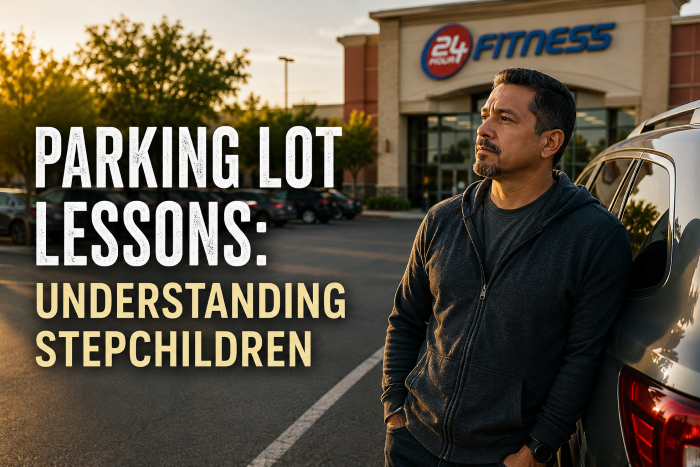
It was mid-afternoon on a weekday, and I had just driven into the gym parking lot in anticipation of a much-needed workout. For that time of day, I spotted a rarity – an open parking space near the front entrance.
Smugly, I thought somebody up there likes me and flipped on my turn signal.
However, before I could turn an SUV approached from the opposite direction, so I waited for it to pass.
Instead of passing, the SUV pulled directly into my parking space.
Anger Erupts
I’m amazed at how suddenly and unexpectedly my mood changed.
My initial shock and outrage quickly moved beyond a simmer into a rolling rage. I immediately recalled the scene from the movie Fried Green Tomatoes when Kathy Bates’ character took matters into her own hands after two young women stole the parking space she had been waiting for.
Watch the Fried Green Tomatoes Parking Lot Scene
Being older myself – and living in California at the time, where you can never have enough insurance – I resisted the temptation to recreate the scene.
I seriously considered turning on my emergency flashers, getting out of my car, and waiting to have a conversation with this “driver.”
After a few moments, however, I decided this wasn’t a hill worth dying on. Instead, I begrudgingly drove to a more distant parking space.
As I was removing my gym bag from the trunk, I glanced toward the SUV and noticed the man who had exited the vehicle was using a walker.
By the way, in case you’re wondering, this wasn’t a handicapped parking space.
Yet just as quickly as my anger had arrived, it disappeared.
To be clear, I’m not excusing the man’s behavior. However, I realized his actions were probably more about his needs than about me.
And that’s when an important stepfamily lesson came to mind.
It also became a powerful lesson in understanding stepchildren and looking beyond behavior to the emotions underneath.
Understanding Stepchildren: Looking Beneath the Behavior
Many stepchildren carry wounds that aren’t immediately visible.
While they may not have physical limitations, many are dealing with emotional hurts resulting from divorce, separation, abandonment, conflict between parents, or the death of a parent.
They’re grieving the loss of their original family structure and trying to navigate changes they never asked for.
Understanding this doesn’t excuse disrespectful behavior. However, it does provide valuable context.
When a stepchild acts out, withdraws, argues, or resists your efforts, it’s often helpful to remember their behavior may be rooted in pain rather than personal rejection.
One of the most important aspects of understanding stepchildren is recognizing their behavior often reflects unresolved emotions rather than a personal attack on the stepparent.
As followers of Christ, we’re called to look beyond behavior and consider what may be happening in a person’s heart.
Likewise, Paul reminds us:
And again:
Although stepchildren remain responsible for their choices, compassion often allows us to respond more effectively than anger ever could.
In many cases, their behavior says more about their struggle than it does about you.
Why Stepchildren Test Stepparents
One of the most challenging aspects of stepfamily life is understanding why stepchildren sometimes push away the very people who are trying to help them.
Many stepparents enter a blended family with good intentions. They want to support their spouse, build a relationship with their stepchildren, and contribute positively to the household. Yet despite those efforts, they may encounter resistance, disrespect, withdrawal, or even outright hostility.
At first, it’s easy to take those reactions personally.
However, understanding stepchildren requires recognizing many of their behaviors are rooted in emotional struggles rather than a rejection of the stepparent as a person.
Loyalty Binds Create Internal Conflict
Many children feel caught between two worlds after divorce or the death of a parent. They may worry that accepting a stepparent will somehow betray their biological parent.
As a result, a child may distance themselves from a stepparent, not because they dislike them, but because they’re trying to remain loyal to someone else.

This internal conflict is often referred to as a loyalty bind.
A child may genuinely care about a stepparent while simultaneously feeling guilty about that relationship. Unfortunately, those conflicting emotions can surface as coldness, resistance, or emotional withdrawal.
Understanding stepchildren means recognizing their behavior may reflect an internal struggle rather than an external judgment of you.
Trust Takes Longer Than Most Stepparents Expect
In traditional families, parent-child relationships develop gradually from birth. In contrast, stepparents often enter a child’s life after years of family history have already occurred.
Consequently, trust doesn’t develop overnight.
Many stepchildren carefully observe a stepparent before deciding whether that person is emotionally safe. They watch how the stepparent treats their biological parent. They notice whether promises are kept. They evaluate whether discipline is fair and whether affection is genuine.
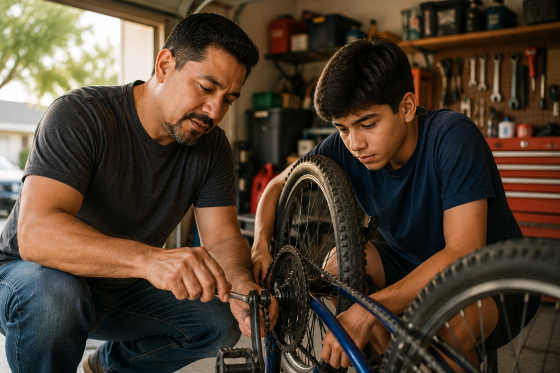
In many cases, children test relationships before they trust them.
While those tests can feel frustrating, they’re often part of the process of building trust with stepchildren.
Hurt People Often Hurt People

Children who have experienced divorce, abandonment, family conflict, or significant loss frequently carry emotional wounds.
Sometimes those wounds appear as anger.
Sometimes they appear as silence.
Other times they show up as sarcasm, defiance, or rejection.
When a stepchild lashes out, the behavior may be inappropriate, but it often reflects pain beneath the surface.
This reality doesn’t eliminate accountability. Children must still learn respect and responsibility. However, understanding stepchildren requires balancing correction with compassion.
As Proverbs 15:1 reminds us:
Consistency Builds Credibility
Many stepchildren have experienced significant change and uncertainty in their lives. As a result, they often place a high value on consistency.
Stepparents build credibility when their words and actions align over time.

Showing up consistently matters.
Keeping promises matters.
Remaining calm during conflict matters.
Being present matters.
While grand gestures are appreciated, trust is usually built through hundreds of small interactions that communicate safety, reliability, and care.
God’s Example of Patience
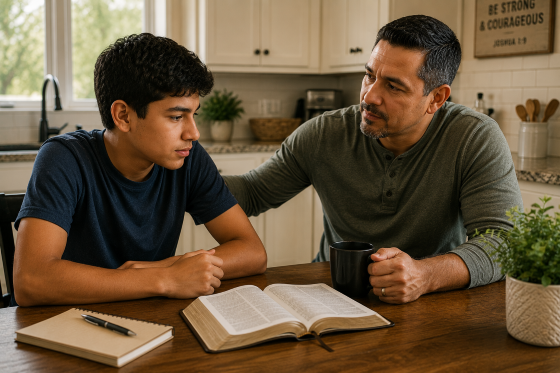
Perhaps the greatest encouragement for stepparents is that God demonstrates extraordinary patience with His children.
Even when we struggle, wander, resist correction, or fail to trust Him, God continues to pursue us with grace and love.
Likewise, stepparenting often requires patience, perseverance, and faith.
Paul writes:
Patience doesn’t mean tolerating disrespect indefinitely. Rather, it means recognizing that healthy relationships often take time to develop.
Lessons Learned
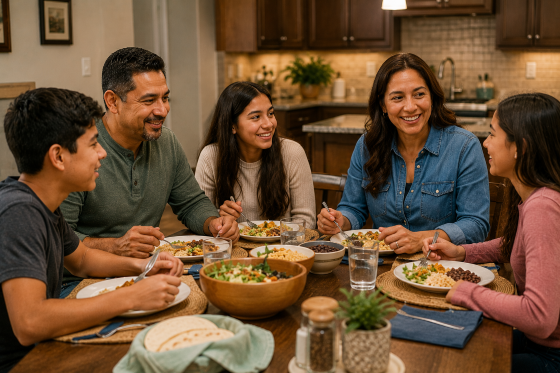
Respect
Treating one another with mutual respect should be the minimum standard for all interactions within the household—no exceptions.
Respect is not earned only when people behave well. Instead, it should be modeled consistently by parents and stepparents alike.
Be Quick to Hear
Ask follow-up and clarifying questions to ensure you understand what is being said.
We’re given two ears and one tongue, allowing us to hear more than we speak.
Listening communicates care.
Sometimes what sounds like defiance is actually frustration, fear, sadness, or confusion.
The more we listen, the more we understand.
Be Slow to Speak
Process what’s happening internally before responding externally.
The tongue is surrounded by teeth for a reason – it needs boundaries.
When you’re slow to speak:
-
You listen more effectively.
-
Others understand you better.
-
You communicate respect.
-
You avoid saying things you’ll later regret.
Be Slow to Anger
If you lose your cool, you often lose your audience.
Allowing anger to take control rarely improves a situation. More often, it makes matters worse.
Anger itself isn’t the problem. The challenge is managing it in a way that honors God and preserves relationships.
Choose Your Confrontations Carefully
If your spouse has given you the moral authority to help parent their children, be selective about when you confront.
Learn to overlook minor irritations.
Not every behavior requires immediate correction, especially during the early stages of building trust.
If you’re uncertain whether to confront an issue, it’s often wise to pause, discuss it with your spouse, and seek agreement before proceeding.
Practice Forgiveness
Forgiveness is a decision to release resentment and thoughts of revenge.
It doesn’t excuse wrongdoing, deny responsibility, or pretend the offense never occurred.
Instead, forgiveness frees us from carrying the burden of bitterness.
Forgiveness often opens the door to understanding, empathy, healing, and peace.
Final Thoughts
That afternoon in a parking lot reminded me how easy it is to judge a situation before knowing the whole story.
The man who took my parking space was still wrong. However, once I understood a little more about his circumstances, my perspective changed.
The same principle applies in blended families, where understanding stepchildren often begins with looking beyond what we see on the surface.
You may discover that hurt, fear, confusion, or grief often drive what looks like disrespect, rejection, or resistance.
As stepparents, we’re called to balance accountability with compassion, truth with grace, and boundaries with understanding.
When we do, we create an environment where healing and trust can begin to grow.

Call to Action
Think about a recent conflict with your stepchild.
Before focusing on what they did, ask yourself what they may be feeling.
This week, make it a goal to ask one additional question, listen a little longer, and respond with a little more grace.
You might be surprised by what you learn – and how much it changes the conversation.