New clothes? Check.
Backpack? Check.
Enough notebooks, pencils, and supplies to stock a small office? Check.
But there’s another back-to-school checklist that’s even more important-the one that helps our kids stay healthy, rested, safe, and emotionally prepared for the school year.
For stepdads, back-to-school season can also bring some unique challenges. Different households may have different schedules, expectations, bedtimes, and routines. You may not control everything that happens in your stepchild’s other home.
That’s okay.
Focus on what you can influence. A steady, supportive presence can make the transition back to school easier for everyone.
Here are 10 areas worth checking as your family settles into the new school year.
Get Sleep Schedules Back on Track
Summer has a way of stretching bedtime later and later. Unfortunately, school mornings don’t make the same adjustment.
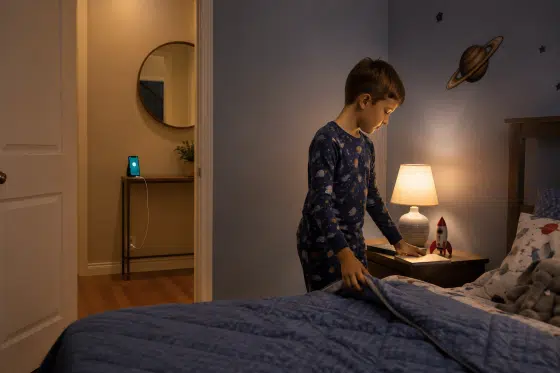
Getting enough sleep helps children concentrate, learn, manage their emotions, and perform better at school.
Start rebuilding a consistent bedtime and wake-up routine. For older children and teens, encourage them to finish homework earlier rather than waiting until late at night.
Phones and tablets can also compete with sleep. Consider establishing a family rule that devices charge outside the bedroom at night.
And remember-consistency doesn’t have to mean perfection.
In a blended family, routines may differ between households. Rather than criticizing what’s happening elsewhere, establish healthy expectations in your own home.
Start the Day With Good Nutrition
We’ve probably all seen the child who would happily consider a toaster pastry and an energy drink a balanced breakfast.
Kids aren’t always going to make the healthiest choices on their own.
That’s where we come in.

A nutritious breakfast can help children start the school day with the energy they need to concentrate and learn.
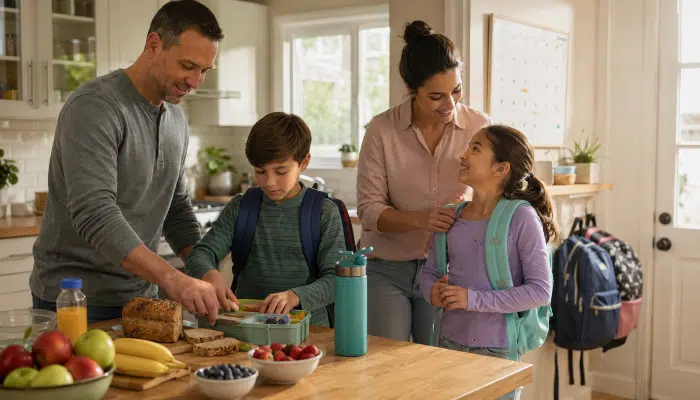
Busy mornings can make breakfast difficult, so prepare when possible. Fruit, yogurt, eggs, whole-grain toast, oatmeal, and other simple foods can make mornings easier.
The same approach works for lunches.
Prepare portions on the weekend, keep healthy snacks available, and let children participate in choosing what goes into their lunch.
Giving them some ownership can make healthy choices feel less like another parental command.
Schedule the Annual Health Checkup
Back-to-school season is a good reminder to ensure your child’s annual physical is up to date.
Regular checkups can help identify concerns involving vision, hearing, growth, sleep, allergies, and other health issues that might affect a child’s school experience.
If your child participates in sports, confirm whether the school requires a sports physical.
It’s also a good time to review medications, allergies, emergency contacts, and required immunizations.
For stepdads, know where this information is kept even if your spouse usually handles medical appointments. You don’t necessarily need to take over-you simply want to be prepared if you’re the adult handling an emergency.
Don’t Forget Dental and Vision Care
Dental problems have an annoying habit of showing up at the worst possible time.
If your child is due for a dental checkup, scheduling it early in the school year can prevent problems from interfering with classes, tests, sports, and other activities.
Vision matters too.
A child struggling to see the board may appear distracted or uninterested when the real problem is much simpler.
If you notice squinting, headaches, sitting unusually close to screens, or complaints about seeing classroom materials, consider having your child’s vision checked.
Teach Good Hand Hygiene
Schools bring hundreds of children together-and plenty of germs come along for the ride.
Remind children that washing their hands with soap and water is still one of the simplest ways to reduce the spread of illness.
They should especially remember to wash before eating and after using the restroom, coughing, sneezing, or blowing their nose.
When soap and water aren’t available, hand sanitizer containing at least 60% alcohol can be useful.
Younger children should be supervised when using sanitizer.
The goal isn’t to make kids afraid of germs. It’s simply to teach habits that protect them and everyone else at home.
Keep Kids Moving
Homework, video games, phones, streaming, and social media can make it surprisingly easy for kids to spend most of their day sitting.
Children and teens ages 6 through 17 should get about 60 minutes or more of physical activity each day.
That doesn’t necessarily mean organized sports.
Ride bikes. Shoot baskets. Walk the dog. Toss a football. Go to the park.
Stepdads can make physical activity an opportunity for connection.
A walk around the neighborhood may create a better conversation than sitting across from your stepchild and asking, ‘So, how was school?’
There’s something about doing an activity together that makes talking easier.
Establish a Homework and After-School Routine
The school day may end when the final bell rings, but the family schedule usually doesn’t.
Homework, sports, activities, dinner, and bedtime can quickly compete for the same few evening hours. A simple after-school routine can help children know what to expect.
Consider establishing a regular time and place for homework. Keep basic school supplies nearby and reduce unnecessary distractions, especially phones, television, and gaming.
For blended families, consistency can be more complicated when children move between two homes. The routines don’t have to be identical.
However, parents and stepparents can help by communicating about major assignments, projects, tests, and school events.
As a stepdad, you don’t have to become the homework police.
Sometimes your best contribution is simply asking, ‘Is there anything you need help with tonight?’
Support usually works better than supervision.
Review School and Traffic Safety
If your children walk or bike to school, don’t assume they remember every safety rule from last year.
Walk the route together.

Review where they should cross streets, which intersections to avoid, and what they should do if something unexpected happens.
For younger children, let them lead the way while you follow. You’ll quickly discover whether they actually know the route.
Older children should also understand basic personal safety.
Make sure they know whom to contact in an emergency and which adults they’re allowed to leave school with.
Blended families should pay particular attention to pickup arrangements. When children move between households, everyone should understand who is picking them up and where they’re going.
Make Sure the School Has the Right Information
Back-to-school is also a good time to review the information your child’s school has on file.
Confirm phone numbers, email addresses, emergency contacts, approved pickup information, medical conditions, and medications.
If the school uses an online parent portal, make sure the appropriate adults know how to access important announcements, grades, assignments, and calendars.
This can be especially important in blended families.
Clear communication between households can prevent missed appointments, forgotten school events, and confusion about who’s responsible for what.
You may not need access to everything as a stepdad. What matters is knowing enough to support your spouse and respond appropriately when you’re the adult on duty.
Check In on Their Emotional Health
Not every back-to-school problem fits inside a backpack.
A new school year can bring anxiety about teachers, homework, friendships, sports, fitting in, and bullying.
For children in blended families, transitions between homes can add another layer of stress.
Pay attention to changes.
Is your child suddenly having trouble sleeping? Complaining about stomachaches on school mornings? Becoming unusually quiet or irritable? Avoiding school or activities they previously enjoyed?
Don’t immediately jump into problem-solving mode.
Sometimes the best first response is simply:
What’s going on? I’m here if you want to talk.
As a stepdad, you may not always be the first person your stepchild chooses to confide in. Don’t take that personally.
Being available matters.
Trust is built over time through dozens of small moments when a child learns, He’s here when I need him.
A Healthy School Year Is a Family Effort
Back-to-school preparation involves much more than buying supplies.
Sleep, nutrition, exercise, hygiene, medical care, homework routines, school communication, safety, and emotional well-being all help children arrive at school ready to learn.
You don’t have to get everything right.
And as a stepdad, you don’t have to control everything happening in your stepchild’s life.
Be consistent. Be observant. Support your spouse. Encourage healthy habits without turning every interaction into a lecture.
Most importantly, keep showing up.
The backpack may eventually wear out, the pencils will disappear, and those brand-new shoes probably won’t look new for very long.
But the security children gain from knowing the adults in their lives are paying attention lasts much longer.
What helps your family make the transition back to school? Share your best back-to-school tip in the comments.
Back-to-School Healthy Checklist
Help your child begin the school year healthy, prepared, and confident.
☐ Establish consistent bedtimes and wake-up times.
☐ Provide a nutritious breakfast before school.
☐ Prepare healthy lunches and snacks.
☐ Confirm annual physicals and immunizations are current.
☐ Schedule dental and vision appointments when needed.
☐ Review proper handwashing and hygiene.
☐ Encourage daily physical activity.
☐ Establish a homework and after-school routine.
☐ Keep track of major assignments, projects, and tests.
☐ Review walking, biking, bus, and pickup safety.
☐ Confirm the school has current contact and pickup information.
☐ Confirm emergency contacts and medical information.
☐ Make sure appropriate adults can access the school’s parent portal.
☐ Establish reasonable screen-time boundaries.
☐ Ask how your child is feeling about school.
☐ Know whom your child can turn to for help at school.
A little preparation now can prevent a lot of stress later.
Make back-to-school preparation easier. Download and print our free Back-to-School Healthy Checklist to help your family stay organized, healthy, and ready to learn.
Originally written by Kaili Killpack. Updated and expanded for Support for Stepdads.