Meet Bob Neve: His Journey, Training, And Approach To Therapy
Saving Marriages through Therapy: A Conversation with Bob Neve


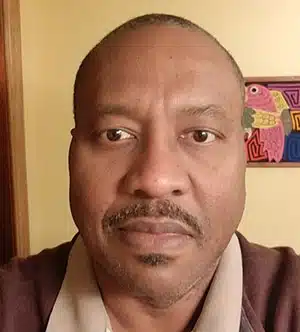
I’m really excited to share the first episode in what I hope will become a regular podcast occurrence for Support for Stepdads. For this first conversation, I had the privilege of sitting down with Bob Neve, a Licensed Professional Counselor (LPC). Bob, along with his wife Sheri—who is also an LPC—created the course Save Your Marriage, and together they bring years of wisdom, experience, and heart to helping couples heal and reconnect.
The following are the questions I asked and the associated time stamp.
Interview Questions
- To start us off, can you tell our audience a bit about yourself and the work you do today as a therapist? – 0:50 – 5:06
- What originally drew you to the field of therapy and mental health? Was there a
defining moment or gradual pull? – 5:07 – 7:20 - Before becoming a therapist, what was your professional or personal path like?
(Education, earlier careers, life experiences, etc.) – 5:07 – 7:20 - Can you walk us through your training and licensure journey—and what that
process was really like for you? – 5:07 – 7:20 - Were there any mentors, professors, or clinicians who had a significant influence on how you practice today? – 7:20 – 11:13
- Early in your career, what types of clients or challenges did you find yourself
working with most often? – 15:32 – 17:15 - Was there a particular experience early on that affirmed, “Yes – this is exactly
what I’m meant to be doing”? – 18:20 – 20:44 - How has your approach to therapy evolved from when you first started to how
you work with clients today? – 21:48 – 30:34 - For listeners who may be unfamiliar with therapy—or hesitant about it—what do you wish more people understood about what therapists actually do? – 33:29 – 36:19
- How would you suggest someone go about selecting a therapist? – 36:20 – 38:29
- I understand you’re available for therapy remotely do you notice any differences between a remote therapy session versus an in person? – 38:30 – 40:51
- If a listener wanted to reach out to you, what would be the best way to do so? – 40:52 – 42:39
- What motivated me to reach to you is your course “Save Your Marriage” could you just give us an overview of that? – 42:40 – 49:02
- Have you worked and do you work with blended families? – 51:36 – 51:17
Podcast Summary Transcript
Prefer to read offline? Download the summary transcript (PDF)
Podcast Complete Transcript
Jump to a section:
- Introduction
- Bob Neve’s Background and Early Career
- Faith, Calling, and the Decision to Become a Therapist
- Mentors and Influences That Shaped Bob’s Practice
- Bob Neve’s Approach to Therapy
- Attachment Styles and Emotional Healing
- What Therapy Really Is (and What It Isn’t)
- How to Choose the Right Therapist
- Remote Therapy vs. In-Person Sessions
- Save Your Marriage: Course Overview
- Success Rates and Working With Blended Families
- Closing Remarks
Podcast Transcript (Click to expand)
Transcript for Support for Stepdads with Gerardo Campbell
interview with Bob Neve, MS, LPC, LIMHP author (with his wife Sheri Neve, also MS, LPC, LIMHP) of the course, Save Your Marriage”
saveyourmarriage.net/
Introduction
Gerardo: All right! Hello everyone! I’m Gerardo Campbell the owner manager for Support for Stepdads and I’m excited because today kind of represents a first for the Blog, this is our first podcast and I have the honor … and I wanna say the first of what I believe will be many podcasts … but I have the honor today of introducing a Licensed Professional Counselor, I also consider a friend his name is Bob Neve and with that let’s get started with the questions. So Bob to start up with, can you tell the audience a bit about yourself and the work you do today as a therapist?
Bob: About myself, let’s see how much time do we have? [smile] do you want my whole history? [chuckle]
Gerardo: You can use your best judgment.
Bob Neve’s Background and Early Career
Bob: I’ll try the one minute version and see how this goes. I was born and raised in Omaha Nebraska, went to Northwest High, lived in North Omaha first 10 years of my life and NW Omaha the next 10 years, went to school in Lincoln, University Nebraska Lincoln, got my bachelors degree in electrical engineering, went to work for Boeing in Seattle in 1985, and I worked for them for 12 years. I was a senior avionics design engineer and I did some defense projects that I can’t tell you about. And when I was there, I made a lot of money, spent it on beer pot, got some good therapy [chuckling]. I also bought two houses while I was there. I always tell people I spent it on beer and pot, but I bought two houses when I worked there … because they had me in Philadelphia for a while and I bought a townhouse outside Philadelphia also. So, spent it on beer pot, got some good therapy, got clean and sober, had a wonderful experience in Alcoholics Anonymous and Narcotics Anonymous and that is the beginning of how I started to be a therapist. In my first probably six or eight months after I got clean and sober, my sponsor Harry E. in Philadelphia said, “Hey I want you to sponsor this kid.” And I sponsored this young teenager in West Philadelphia … and … I loved it. It was so interesting. I guess I never thought about calling him my first client, but it was so interesting connecting with another human being I’d never met before. He didn’t know me. We only met because of AA and I helped him stay clean and sober, it was a great experience. That was in 1993 when I got clean and sober. I finished the last of my pot on Valentine’s Day 1993 … so I stopped putting bad stuff in my body February 15, 1993. I had the last drink that I ever had on January 26, 1993. I had two beers in one day and I said “uh-oh this is in the same pattern I’ve done before, I can’t do this anymore” so I’ve been clean and sober over for 33 years in three days how about that.
Gerardo: Wow, that’s impressive
Faith, Calling, and the Decision to Become a Therapist
Bob: So then I moved back to Omaha, made good money at Boeing, brought a bunch back with me, and I did real estate for a while. I had some rental properties and I flipped a couple of houses and … let me go back and do two significant things I glossed over … I got born again in 1981, October 27, 1981. That was a big change for me because that was the end of the coke, the pills, the LSD, all the hard drugs … so between October 27, 1981, and Valentine’s Day 1993 there was only alcohol and pot. There wasn’t anything else harder than that. AND I got married to my first wife Nancy in December of 1993? 94! yes 94 she moved in January 1994. I was a Christian but I was kind of backslid and there’s my girlfriend moving in with me and we got married December OK? All right. So, and then back in Omaha I’m working Real Estate. I’m doing my 11th step, seeking through prayer meditation to improve my conscious contact with God as I understand Him, and He very clearly said to me, “OK you’re gonna go become a counselor now.” and I called up my wife’s best friend Mary and I said how do I do that? She goes, “oh, you take these 8 classes and you get your Licensed Alcohol and Drug Counselor license and then you go get a Masters degree and then you’ll become an LMHP. That’s how it happened.
Gerardo: Ok.
Bob: How about that?
Gerardo: Yes, so would you say there was a single defining moment in what led you to become a therapist or was it like a slow gradual pull?
Bob: I think it was … I think it was some quantum steps. I think it was, you know, me getting clean and sober. Getting good therapy, getting out of my depression right, sponsoring that first kid in West Philadelphia … really, having some good experiences in AA and NA … helping other people … there were just those various steps when I helped people that they were clearly deeply touched or there have been times when I’ve said a few words to an almost stranger and they start crying like, “Oh my God you … you really touched the nerve, you really touched me and heal me of what I had.” Just like that [snaps fingers] so many times and you know and then prayer and meditation in 2001 and got my first eight classes done between July and November of 2001. I was in an ethics class one of my eight classes on September 11, 2001 and then we had to stop class and go back and do it later but that’s a side issue. But yeah, I think the biggest defining moment was in prayer meditation, “You’re gonna become a counselor now.”, and then I just followed the steps got my provisional license and alcohol drug counseling in April 2002. Got my masters degree of Bellevue Univ. Got my LMHP soon after that. Got my second masters degree, got my licensed independent mental health practitioner license after that. I worked for other people from 2001 through 2008 or 9 (was the last time I worked for anybody) and then started my own thing.
Mentors and Influences That Shaped Bob’s Practice
Gerardo: Ok. Well, along your journey towards licensure as a therapist, were there any mentor, professors or clinicians that had a significant influence on your practice today.
Bob: Oh absolutely. See if I can go chronologically here. My first two sponsors, Dick V. in Seattle and Harry E. in Philadelphia. These guys had an incredible impact on my life. Unpaid … unprofessional … [laughing] unprofessional sounds funny they weren’t professionals, they were volunteers. Helped me tremendously and as since I’ve been a therapist since 2002, I know how hard it is for people to find a good sponsor. And I got two GREAT ones. So my next mentor Stuart Baxter was a Presbyterian minister and he was the guy that would come into NOVA, which was a residential treatment center, the first Big resident Treatment Center I worked at in 2001 through 2004. Stuart Baxter would come in and do people’s 5th Step stuff which is confession right. You take your 4th Step, everything you’ve ever done wrong and you share it with yourself, God, and another human being. Well, Stuart, was that other human being. So people would come out from doing their fifth step with Stuart and these people were CHANGED! And finally one day, I stopped Stuart and I said, “Hey, You’re Stuart Baxter right?” and he said, “Yeeeuss.” [in Stuarts’ deep baritone voice]. I said, “I’m Bob Neve, I’m one of the therapist here. I just wanna know … what are you doing in my clients???!?” And he gave me this funny look and I’m like, “No no [nothing bad]” and I smile. I said, “Whatever you’re doing is awesome. What is it?” and he said well he’s minister so God Jesus is definitely part of all this stuff. Neuro Logistic Programming is what he used to help get through to people. So so I said, “like what is that?” Oh actually, I said oh, NLP! I’ve heard of that before somebody gave me … a girl that I dated and I don’t know 92 or 91 … give me an NLP book. I read “An Intro to NLP” (1)* and when he said that I thought OK, how do I get some NLP training. So I got some NLP training from Dixie Clark in Omaha, from Kris and Tim Hallbom who originally were in San Francisco Bay Area and they moved to Utah and then other NLP people. I’m a big follower of Steve and Connirae Andreas and a whole number of different NLP teachers, Tony Robbins. I love him, I really haven’t taken any of his courses, I just read a couple of his books and then there’s other people in the NLP world that I connected with Dr. Frank Bourke I love Dr. Frank Bourke, Dr. Richard Gray, two guys on the East Coast northern East Coast. Nick Kemp I admire him a ton. And all the great NLP teachers that have come from Bandler and Grinder from their first books that they wrote in what was that, let’s see, I’m gonna say 1970s. OH Robert DILTS! How can I leave out Robert Dilts — oh man I’m so embarrassed that I didn’t say Robert Dilts! Robert Dilts is the encyclopedia of NLP. He’s walking in encyclopedia of NLP, so love Robert Dilts. And then I guess I’d have to add my thesis professor from Bellevue University, Dr. Roxanne Sullivan of course she had a huge impact on me too.
Gerardo: Ok. You mentioned NLP, for the audience could you give like a maybe a brief overview of the characteristics of that form of therapy?
Bob: Sure. NLP is Neuro-Linguistic Programming, and these two guys Richard Bandler and John Grinder got together and one of them was a linguist professor and the other one in psychology, I think, and they got together and one of the first conversations they had was, “WOW Virginia Satir is an amazing Therapist! Fritz Pearls is an amazing Therapist! Milton Erikson are amazing Therapists. If we could study them and learn what they do and teach it to other people, we’d make a million dollars … or whatever they said I don’t know if they were thinking about money or just changing in the world. So that’s what they did. They started studying Virginia Satir, Fritz Pearls and Milton Erickson, and a number of other people throughout time. This is the 1970s in one of the state universities in California.
Bob: … Now with that said, let me tell you, in my mind there’s kind of four different camps of NLP. One of them is full of shysters! One of them is full of Guys who teach men how to pick up women against their will. NLP is a strong therapy practice and it could be used for evil, like any good powerful technique. So there’s the shysters, they are the guys who don’t believe in the science, who use it to their own benefits, the guys that we don’t like, right. There’s the real practitioners and theoreticians that study this stuff that do actual research and training, Robert Dilts and Frank Bourke and Richard Gray. I’ve done a couple of small research things too with NLP. So there’s a group of us that are kind of academics. There’s another group that I call “those lovable old women”. They don’t have masters in therapy. They don’t have PhD‘s but they are angels and they are magical and they use NLP to help people find deep meaning and joy in their life. And there’s a bunch of them! I don’t wanna start naming them off because then I’d leave off somebody’s name … you just go ChatGPT “NLP Angel women experts” and you’re gonna find a whole bunch of names of women, and a few men … a few men that are really, really Highly spiritual in their use of NLP. And then the other group, we all like these guys they’re the money makers Tony Robbins made probably I don’t know $1 billion selling what he sells. I like him. I admire him, I like what he says, I’ve never met him, but yeah, there’s the money makers. Some guys have made a ton of money doing this. I’m really one of the academicians. I’m really Dr. Frank Bourke and Richard Gray, Robert Dilts, those are my buddies. If I go to a conference and I see all these people I’m gonna hang out with Dr. Frank Bourke and Richard Gray and Robert Dilts and we’re gonna wanna hang out with the Angel ladies, right, so the guys that have a ton of money, they don’t wanna hang out with us. We’re we’re only millionaires or moderately poor … they’re they’re in a whole other echelon, but we love them,
Gerardo: Ok.
Bob: So does that help?
Gerardo: Yes, it does, thank you!
Bob Neve’s Approach to Therapy
Gerardo: So early in your career, what types of clients or challenges did you find yourself working with most often?
Bob: Early on of course I was working with addictions and literally within the first two weeks of working for NOVA Therapeutic community, I realized I’m gonna have to become an expert in trauma. Because every single person that was in NOVA had had trauma as a child, as a teen teenager, maybe in their 20s in prison, lots of lots of trauma. And so I started studying Ellen Bass‘s book. I’ll find the name and put it up here [“Courage To Heal” by Ellen Bass (2)*]. And [I studied] all the great trauma informed therapists to help understand the damage that happens to people when they’re wronged, when they’re hurt, when they’re taken advantage of, and how to not only recognize that, but to do something about it. To overcome it. To heal it, to mend the wound, so it isn’t overcoming somebody emotionally today. And so that their choices that they made from that trauma, they don’t put into bad decisions about life today.
Bob Neve’s Approach to Therapy (continued)
Bob: And so I started studying trauma-informed care, and then I just simply specialized in those two things—addiction and trauma—and then depression and anxiety, because all four of those things go very much hand in hand. Those are four different pieces of the same pie.
Bob: I also realized early on that I didn’t really enjoy working with kids. I liked working with adults who had the power to do something about their life and change their life. I liked working with people who had agency.
Gerardo: Was there any experience early on that affirmed this was the right career path for you?
Bob: Absolutely. My first job was interning at NOVA. Within weeks, my supervisor said, “He’s a natural.” Then the clinical director pulled me aside and said, “I don’t know what you’re doing, but whatever it is, you’re doing it very well.” That kind of affirmation early on was huge.
Gerardo: Do you ever work jointly with your wife?
Bob: Yes, absolutely. We’ve worked together with couples, and we’ve found that sometimes having both a male and female perspective in the room can be very powerful.
Gerardo: How has your approach to therapy evolved over time?
Bob: It evolved chronologically. I started with 12-step work, then Transactional Analysis from Eric Berne, then Cognitive Behavioral Therapy from Aaron Beck. I learned about the Karpman Drama Triangle, assertiveness training from “Your Perfect Right,” Virginia Satir’s family systems work, NLP, Dialectical Behavioral Therapy, Motivational Interviewing, “Changing for Good,” parts work, polyvagal theory, Internal Family Systems, and Acceptance and Commitment Therapy.
Bob: Those twelve authors and theoreticians form the backbone of my therapy approach today.
Attachment Styles and Emotional Healing
Gerardo: Have you done much work with attachment styles?
Bob: I’ve read about attachment styles, and I like them. Most people who come into therapy do not have secure attachment. What I really focus on is not labeling someone as anxious or avoidant, but helping them move toward secure attachment.
Bob: Secure attachment looks like emotional regulation, assertiveness, and safety in relationships. That’s the goal.
Gerardo: We’re offering a free attachment style assessment to our readers.
Bob: (laughing) I think I can do that assessment in four questions—but I’m sure yours is more thorough.
What Therapy Really Is (and What It Isn’t)
Gerardo: For listeners unfamiliar with therapy or hesitant to try it, what do you wish people understood better?
Bob: I wish people understood that a good therapist is not trying to convince you to become someone else. A good therapist is trying to set you free from whatever enslaves you—patterns, fears, compulsions, beliefs.
Bob: Unfortunately, about a quarter of my colleagues are not very good therapists. Some have actually done harm. Therapy should not just be venting and hearing “how does that make you feel?” over and over.
Bob: Good therapy involves education, insight, tools, and real change.
How to Choose the Right Therapist
Gerardo: How would you suggest someone go about selecting a therapist?
Bob: The biggest thing I tell people is: trust your judgment. If you leave sessions feeling consistently worse, or you don’t feel safe being honest, that therapist may not be the right fit.
Bob: Rapport matters more than technique. You shouldn’t feel like you’re editing yourself. And sometimes I tell clients directly, “I don’t think we’re clicking,” and I help them find someone else.
Remote Therapy vs. In-Person Sessions
Gerardo: Are there differences between remote therapy and in-person sessions?
Bob: Yes. People are much more likely to show up for remote therapy. It’s easier, more accessible, and more flexible.
Bob: You lose some body language below the camera frame, but facial expressions and tone usually communicate enough.
Bob: The one thing I miss as an addiction counselor is I can’t smell alcohol on Zoom. (laughs)
Save Your Marriage: Course Overview
Gerardo: If a listener wanted to reach out to you, how would they do that?
Bob: You can Google my name or visit theclearviewcenter.com. I offer a free 5- to 15-minute call to see if we’re a good fit.
Gerardo: Can you give us an overview of your “Save Your Marriage” course?
Bob: Absolutely. Sheri and I spent about a year and a half developing the course. It consists of twenty video lessons and a detailed workbook.
Bob: We cover understanding yourself, personality, love languages, communication, boundaries, conflict resolution, compatibility, and maintenance.
Bob: It’s designed to be affordable and self-paced for couples who may not be able to commit to long-term weekly therapy.
Success Rates and Working With Blended Families
Gerardo: Do you track success rates in your practice?
Bob: Yes. About 92% of people report being happier after therapy. Roughly two-thirds of couples stay married. The remaining third often separate because the relationship was unhealthy, but they still end up in a better place.
Gerardo: Have you worked with blended families?
Bob: Absolutely. Blended families are complex but beautiful. We try to minimize judgment and focus on understanding, because people already judge themselves harshly.
Closing Remarks
Gerardo: That’s a great note to end on. Bob, thank you so much for your time and insights.
Bob: Thank you for having me.
Gerardo: And thank you to our audience. This is the first of what I hope will be many podcasts. Please leave feedback in the comments, and have a blessed day.
References
(1) “Introducing NLP: Psychological Skills for Understanding and Influencing People”, co-authored by John Seymour and Joseph O’Connor.
Other foundational NLP Books:
Richard Bandler and John Grinder: Frogs into Princes
John Grinder and Richard Bandler: The structure of magic: a book about communication and change
Tony Robbins: Unlimited Power: The New Science of Personal Achievement
Robert Dilts: Sleight of Mouth: The Magic of Conversational Belief Change
Steve Andreas and Charles Faulkner: NLP: The New Technology of Achievement
(2) “Courage to Heal” by Ellen Bass
(3) “Alcoholics Anonymous” by Bill Wilson and Dr, Bob Smith
(4) “Games People Play” by Eric Berne
(5) “Cognitive Behavioral Therapy” by Aaron and Judith Beck
(6) “A Game Free Life” by Stephen Karpman
(7) “Your Perfect Right”, by Robert Alberti and Michael Emmons
(8) “The Art of Becoming Fully Human” is a video series by Virginia Satir
(9) “Peoplemaking” by Virginia Satir
(10) “Dialectical Behavioral Therapy” by Marsha Linehan (11) “Motivational Interviewing” by Miller and Rollnick
(12) “Changing For Good” by Prochaska, DiClemente and Norcross
(13) “Polyvagal Theory” by Stephen Porges
(14) “Internal Family Systems” by Richard Schwartz
(15) “Acceptance and Commitment Theory” by Hayes, Strosahl, Wilson
Click the link to explore attachment styles and discover which one is yours.