As the year draws to a close, many cultures around the world pause to reflect, reconnect, and set intentions for the future. From December 26 to January 1 each year, Kwanzaa offers a meaningful opportunity to do just that. Rooted in African heritage and celebrated primarily within African-American communities, Kwanzaa is a seven-day cultural celebration that emphasizes shared values, community strength, and purposeful living. Even for those who do not celebrate it, Kwanzaa provides a powerful framework for reflection, gratitude, and growth as the New Year approaches.
The History of Kwanzaa
Kwanzaa was created in 1966 by Dr. Maulana Karenga, a scholar and activist, during a period of intense social change in the United States. The holiday was established to help African Americans reconnect with their cultural roots, reinforce community bonds, and affirm shared values rooted in African traditions.
The name Kwanzaa comes from the Swahili phrase “matunda ya kwanza,” meaning “first fruits,” reflecting traditional African harvest celebrations. While Kwanzaa is not a religious holiday, it is deeply cultural and philosophical, focusing on identity, unity, and responsibility. From its beginnings, Kwanzaa was designed to be inclusive, educational, and empowering, offering principles that remain relevant decades later.
The Relevance of Kwanzaa Today
In today’s fast-paced and often fragmented world, the principles of Kwanzaa feel more relevant than ever. At the heart of the celebration are the Nguzo Saba, or Seven Principles, each observed on a specific day:
- Umoja (Unity)
- Kujichagulia (Self-Determination)
- Ujima (Collective Work and Responsibility)
- Ujamaa (Cooperative Economics)
- Nia (Purpose)
- Kuumba (Creativity)
- Imani (Faith)
These principles encourage individuals and families to think beyond themselves and focus on collective well-being. Whether applied to family life, work, or community involvement, Kwanzaa’s values promote intentional living and long-term growth. In a season often dominated by consumption and excess, Kwanzaa offers a refreshing emphasis on meaning over materialism.
How to Celebrate Kwanzaa
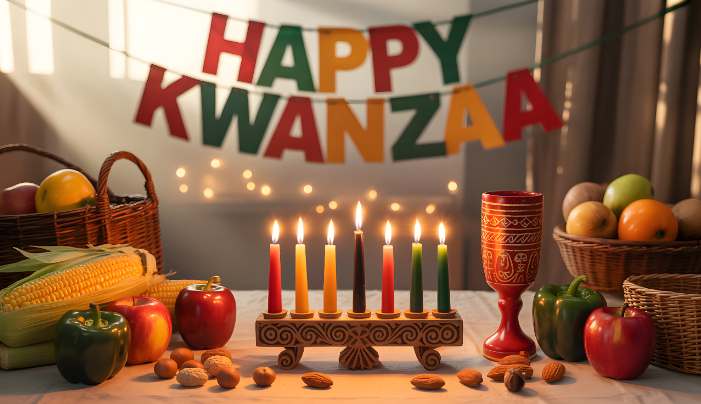
Kwanzaa celebrations can be simple or elaborate, depending on the family or community. One of the most recognizable symbols is the kinara. This candle holder holds seven candles: one black candle representing the people, three red candles symbolizing struggle, and three green candles representing hope and the future. Each evening, a candle is lit and the principle of the day is discussed.
Other important symbols include the mkeka (woven mat), mazao (crops), kikombe cha umoja (unity cup), and zawadi (gifts), which are often handmade or educational rather than extravagant. Families may gather to share stories, music, poetry, and meals reflecting African and African American traditions.
For families who do not traditionally celebrate Kwanzaa, participating can be as simple as learning about the principles, discussing them at the dinner table, or attending a local cultural event. Just as Christmas dinners might feature roast turkey or mince pies, Kwanzaa feasts often highlight soulful, heritage-inspired dishes, turning food into a celebration of history and identity.
Fun Facts About Kwanzaa
- Kwanzaa is celebrated in countries beyond the United States, including Canada and parts of the Caribbean.
- Gifts are usually exchanged on the last day of the year, January 1, and often focus on books or items that reinforce cultural pride.
- Unlike Christmas, Kwanzaa is not tied to commercial traditions, which is why it is often described as a values-centered celebration.
- Each greeting during Kwanzaa is “Habari Gani?” meaning “What’s the news?” with the response reflecting the principle of the day.
A Meaningful Way to End the Year
Kwanzaa closes the year on a hopeful, reflective note, seamlessly bridging the space between celebration and New Year intention-setting. Whether observed fully or appreciated from a distance, Kwanzaa invites everyone to pause, reconnect, and consider how unity, creativity, and purpose can shape a better future. In that sense, its message is universal — a fitting and inclusive way to welcome a new beginning.
Stepdads, Support for Stepdads is just a tap away! We’re excited to introduce the mobile version of our trusted site, offering the same wealth of resources, expert advice, and community connections as our desktop site — now optimized for your phone or tablet. Whether you’re seeking tips on bonding with stepchildren, navigating co-parenting, or finding encouragement from others who understand, this mobile site ensures help is always at your fingertips. Accessible anytime, anywhere, Support for Stepdads is your go-to resource for thriving in your unique role. Empower your journey today —your family will thank you!
Rae Aria holds a bachelor’s degree in English and Literary Studies and enjoys writing family-oriented topics. When she’s not writing or working as an editor on Support for Stepdads, she enjoys spending time with her two sons and reading a variety of subjects.