
How To Save Energy Costs This Winter
Simple Ways To Keep Your Home Warm And Your Bills Low


Winter is an ideal time to curl up with your favorite book and sit by the fireplace as the snow falls. With the beauty, wonder, and calmness that come with the season, it’s easy to enjoy every minute of it. Even so, there may be something in the way of thoroughly enjoying your winter wonderland. This is why you need to know how to save on energy costs this winter.
Due to inflation, fuel and gas prices continue to rise. Not only that, but carbon emissions and a lack of energy efficiency are negatively affecting our planet. You may think you’ve done a good job of keeping warm air in your home.
However, you might be surprised to find out that you could be letting in more drafts. The good news is that there are ways to maintain an energy-efficient home that will reduce your utility bills and carbon footprint. Here’s how to save energy costs this winter.
Conserve the Sun
There’s nothing better than using one of nature’s most effective heaters: the sun. Just as you would close blinds during the summer months to keep cool air in, the opposite applies during the winter.
Keep your curtains open during the day to let warm rays shine through your home. This will provide you with free heat that warms specific areas of the house.
This is known as the greenhouse effect. It’s an efficient, cheap, and simple way to keep warm air in. For example, if you observe cats, you’ll notice that they sleep where the sun is coming in.
This is because it keeps them warm during the winter months, not just because it’s a comfortable place to nap. Please take advantage of the sun’s warmth by conserving its heat during the day and closing your curtains at night.

Decrease the Temperature
It may seem simple, but lowering your thermostat setting will significantly reduce energy consumption. It doesn’t even need to be a considerable amount, just enough to stay comfortable. If you’re still struggling to keep warm, there are alternative heating options you can use to compensate for the lost temperature.
The good part about the cold is that you can always add more layers. If you live as a family, it can be challenging to keep everyone on the same page.
To avoid frustration with others turning up the heat, have a family meeting to discuss why you’re doing it. Have everyone decide on a reasonable temperature and offer alternative heating options they can use.
Use a Fireplace
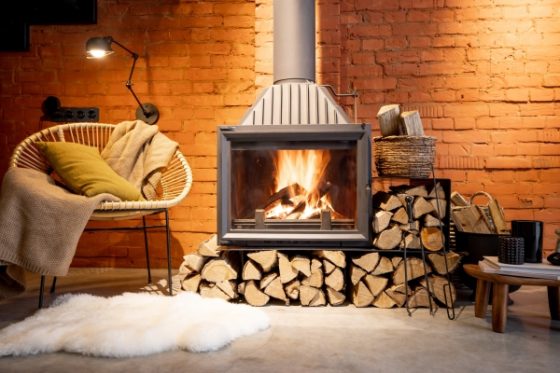
There’s nothing more effective than a well-made fireplace. This simple but effective heating source has kept people warm for centuries, even before thermostats were invented.
Whether you have a traditional wood-burning fireplace or one that runs on gas, you might be surprised at how hot they can get. Even if you can’t afford to install a fireplace, some electric fireplaces can emit heat.
With that said, make sure you keep the fireplace’s heat in the house. If your fireplace isn’t properly ventilated, a significant amount of the heat may escape straight up the chimney. To prevent this from happening, install air-tight doors in the fireplace, especially in older fireplaces, including a door with operable vents.
This will bring a lot more heat into your home, to the point that it may even have to cool things down! For a low-maintenance and affordable option, consider purchasing an electric fireplace that includes heat emission capabilities.
Use Space Heaters
If you don’t have a fireplace and are trying to keep the thermostat down at the same time, your house may become very chilly. While layers are an option, space heaters are an even more effective heating alternative.
They can be relatively inexpensive and emit a lot of heat. To continue saving money and reducing energy consumption, consider using electric space heaters.
Space heaters are most effective in tight, confined spaces. They won’t be as effective if they’re used in large, open spaces. Instead, use space heaters for rooms that tend to be colder than others.
Examples of these include bathrooms, garages, and upstairs bedrooms. You can even have a towel warmer for your bathroom when the thermostat is down, and you still want to take a shower.
Prevent Drafts
Drafts are one of the main reasons people get cold during the winter. When your home isn’t well-insulated, cold air seeps in and makes you use more heat than you need.
You may still need to wear full layers and a blanket, even in high temperatures. The good news is that caulking, sealing air leaks, and draft prevention are usually inexpensive and easy.
The first place you should look is your windows. Seal your windows with clear plastic cling wrap or window film. Next, take an inventory of all your doors to see if damaged strippings or holes allow cold air to enter.
Replace missing or damaged weather stripping and apply new caulk to open holes. Finally, seal or caulk any gaps you notice in the attic or basement. These areas are rarely used, making them the biggest culprits of unwanted drafts.
Watch Out for Unused Rooms
Depending on the size of your house, there could be rooms that you rarely use. A guest room may sit empty for long periods. Your child’s room may be empty once they go off to college. Unfortunately, these rooms could be expending energy without you realizing it.
Since heat travels into every area of your house, determine if you can close any vents in specific rooms. Keep these turned off unless the room needs to be used for a particular purpose.
Close all the blinds in the room and keep the door closed at all times. This can help you focus on areas of the house that need heat to avoid wasting energy.
Take Care of Your Windows
Your windows will be one of the most critical aspects of your house during the winter. Older homes often have less insulated windows, making it challenging to retain warm air.
To prevent drafts from seeping through, take good care of your windows. This can be done with a simple caulk and resealing equipment, which can be found at any local hardware store.
Close curtains and blinds at night. From there, seal any holes or damage you notice around the window. Contrary to popular belief, you don’t need new windows to maintain a warm house.
You’ll still run into similar problems later, so it’s best to work with what you already have. You also don’t need to do any exterior caulking if it isn’t necessary. A quick touch-up of any holes with caulk will work fine.
Re-Seal Holes and Leaks
As mentioned above, drafts tend to leak through hidden holes created from minor damage over time. Several factors, including weather or age, can cause this.
Regardless of how it happens, it’s up to you to prevent cold air from entering your home because of these leaks. The good news is that air sealing is relatively inexpensive, easy, and accessible.
Start by going around your home and finding draft spots. Use a match, lighter, or candle and see if the flame moves more in specific locations. You can also use a plastic bag on a hanger.
Use caulk on any holes or leaks that you find. Caulk works well for window and door frames. From there, you can use weatherstripping around anything that requires movement. This works well for window sashes and doors.

Use LED Lights
It’s essential to consider all factors when reducing your utility bills. If you’ve been noticing your electric bill going up, it could be your choice of a lightbulb.
This could escalate as you hang up holiday lights and decorations. With the amount of energy being used up by your electricity, your utility bill may become very expensive.
With that in mind, could you consider using LED lights? This includes decorative lights that you hang up for the holidays. LED lights are one of the most energy-efficient options available.
They use 75% less energy than traditional incandescents and last much longer. Durable and long-lasting, they use very little power while emitting a bright glow that will capture everyone’s attention.
Insulate Your Attic
The attic is one of the least used portions of a house, rarely insulated for living needs. If you don’t already have a living space up in the attic or reside in an older home, you may want to consider installing insulation. While this may be the most expensive option on this list, it will be an investment that pays for itself with time.
It’s highly recommended that you hire a professional for this task. A professional would advise you on the amount of insulation needed, its optimal placement, and the proper insertion of insulation into your attic.
With proper insulation, your heating bill will decrease. Even so, if attic insulation is slightly outside of your budget, continue checking the attic and sealing holes or air leaks.
Layer Up
One of the most cost-effective ways to improve energy efficiency is to layer up and take advantage of blankets. This can be especially useful if you have to turn the thermostat down.
Wear long-sleeved shirts at all times and wear pants that keep you warm. When you’re in your own home, make it a habit to always take a blanket with you.
If you have children, give them safe, warm clothing that will keep them comfortable. Also, since your feet are one of the most heat-sensitive parts of your body, always wear socks to regulate your body’s temperature. For pets, consider dressing your dogs in sweaters if they don’t have long fur.
Cats are usually capable of warming themselves in sunny spots in the house. For hairless cats, keep them warm with a cat-friendly sweater. For an extra layer of energy efficiency, turn the heat down at night and use your bed sheets to compensate.