
World Logic Day: Friday Humor
Exploring the history, importance, and everyday relevance of logic in a complex world

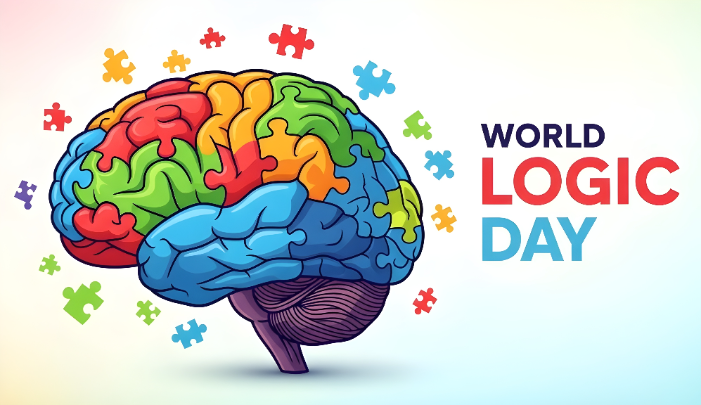
World Logic Day is celebrated every year on 14 January to highlight the importance of logic, reasoning, and critical thinking in human knowledge and everyday life. In a world increasingly shaped by information overload, digital media, and complex global challenges, logic is vital for helping individuals think clearly, make informed decisions, and engage in constructive dialogue.
The History of World Logic Day
World Logic Day was officially proclaimed by UNESCO in 2019 and first celebrated in 2020. The chosen date, 14 January, honours the birth of two influential figures in the field of logic: Alfred Tarski, a renowned Polish logician and mathematician, and Kurt Gödel, an Austrian logician famous for his incompleteness theorems.
The establishment of World Logic Day reflects UNESCO’s commitment to promoting education, science, and culture as foundations for peace and sustainable development. Logic, as a discipline, has deep roots dating back to ancient civilisations, particularly in the work of Aristotle in Ancient Greece. Over the centuries, logic has evolved through philosophy, mathematics, computer science, and linguistics, shaping how humans understand truth, argumentation, and reasoning.
By dedicating a global day to logic, UNESCO aims to raise awareness of its relevance beyond academic settings and to encourage societies to value rational thinking as a tool for problem-solving and cooperation.
The Significance of World Logic Day
World Logic Day is significant because logic underpins nearly every aspect of human progress. It is essential in education, scientific research, technology, law, ethics, and even daily decision-making. Logical thinking helps individuals distinguish facts from opinions, recognise flawed arguments, and resist misinformation.
In today’s digital age, where false information can spread rapidly, logical reasoning is more important than ever. World Logic Day encourages people to question assumptions, evaluate evidence, and engage respectfully with differing viewpoints. It also promotes intellectual humility—the understanding that beliefs should be revised when presented with better reasoning or new evidence.
On a broader level, logic supports democratic values, peaceful dialogue, and social cohesion. When people reason logically, disagreements are more likely to be resolved through discussion rather than conflict. World Logic Day serves as a reminder that rational thinking is not only an academic skill but a social responsibility.
How to Celebrate World Logic Day
Here’s how you can celebrate World Logic Day in meaningful and accessible ways, both individually and collectively:
- Engage in critical thinking activities such as logic puzzles, brain teasers, chess, Sudoku, or strategy games that challenge the mind.
- Read or learn about logic and philosophy, whether through books, podcasts, documentaries, or online courses that explore reasoning, fallacies, and argumentation.
- Attend or organise discussions, workshops, or lectures focused on critical thinking, media literacy, or ethical reasoning.
- Encourage logical thinking in education, especially for children and young people, by teaching them how to ask questions, analyse information, and think independently.
- Reflect on daily decision-making, focusing on how logic influences choices at work, in relationships, and in pursuing personal goals.
- Promote respectful dialogue, especially on social media, by engaging in reasoned conversations rather than emotional or reactive responses.
World Logic Day is a celebration of humanity’s capacity to reason, understand, and collaborate. This day reminds us to pause, think clearly, and embrace the power of reason to shape a better world.
Here’s a logic-related joke.
A man walks into a sports bar. He sits down next to this blonde at the bar and stares up at the TV as the 10:00 news comes on. The news crew was covering a story of a man on a ledge of a large building, preparing to jump.
The blonde looks over and says “Do you think he’ll jump?”
The guy says, “You know what, I bet he will.” The blonde replies, “Well, I bet he won’t.” The fella puts $50 on the bar and says, “You’re on!”
Just as the blonde places her money on the bar, the guy on the ledge dives off the building, falling to his death. The blonde was very upset and hands her $50 to the guy saying, “Fair’s fair… Here’s your money.”
He replies, “I can’t take your money. I saw this earlier on the 5 o’clock news and knew he would jump.”
The blonde says, “I did too, but I didn’t think he’d do it again!”
Here’s how to train your child to think critically.
Ready to Turn Lunch Struggles into Wins? Take the guesswork—and the chaos—out of packing lunches! A Bentgo lunch box keeps meals organized, fun, and mess-free, even on the busiest mornings.
Explore Bentgo Lunch Boxes Now